Why yoga reaches anxiety where willpower can't
When you feel anxious, your body has already made its decision. The heart speeds up, the breath turns shallow and high in the chest, the muscles brace, and stress hormones flood the system. This is the sympathetic nervous system — the "fight or flight" branch — switched firmly on. The reason you can't simply think your way to calm is that the alarm isn't a thought. It's physiology.
Yoga works from the bottom up. Instead of arguing with anxious thoughts, it speaks to the nervous system in its own language — slow movement, steady posture, and a long, unhurried breath. A widely cited 2012 paper proposed that yoga-based practices stimulate the vagus nerve, raise activity in the calming GABA system, restore the parasympathetic "rest and digest" branch, and lower the body's overall stress load. In other words: yoga settles the body, and the mind is allowed to follow.
"Yogas chitta vritti nirodha" — Yoga is the stilling of the fluctuations of the mind. — Yoga Sutras of Patanjali, 1.2
What the research actually shows
Yoga for anxiety is one of the better-studied mind-body practices, and the findings are consistent. A 2018 meta-analysis in Depression and Anxiety pooled eight randomised controlled trials and found yoga reduced anxiety more than no treatment, with notably larger effects when measured against active comparison groups. A 2021 randomised trial run by researchers at NYU and Harvard-affiliated institutions, published in JAMA Psychiatry, tested yoga directly against cognitive behavioural therapy in adults with generalised anxiety disorder — and found yoga clearly helped, though CBT remained the stronger treatment.
The brain imaging is just as telling. In a 2010 study, one group practised yoga while another walked for the same length of time, three times a week for twelve weeks. The yoga group showed greater improvements in mood and anxiety — and brain scans found higher levels of GABA, the main calming neurotransmitter, with those rises tracking the drop in anxiety. Movement helped; yoga helped more. And a 2025 network meta-analysis comparing exercise types found yoga produced the largest reduction in cortisol of any modality studied.
Not all yoga is the same
This is the part most beginners miss. "Yoga" covers everything from a candle-lit restorative class to a sweat-soaked power session — and for an anxious nervous system, the difference matters enormously. The styles that calm anxiety best are slow, grounding, and gently supported. The breath leads the movement, holds are longer, and the body is given time to soften. Faster, hotter, more athletic styles aren't bad — they build strength and energy and many people love them — but they raise heart rate and internal heat, which is the opposite of what a flooded nervous system needs in the moment.
The poses that calm fastest
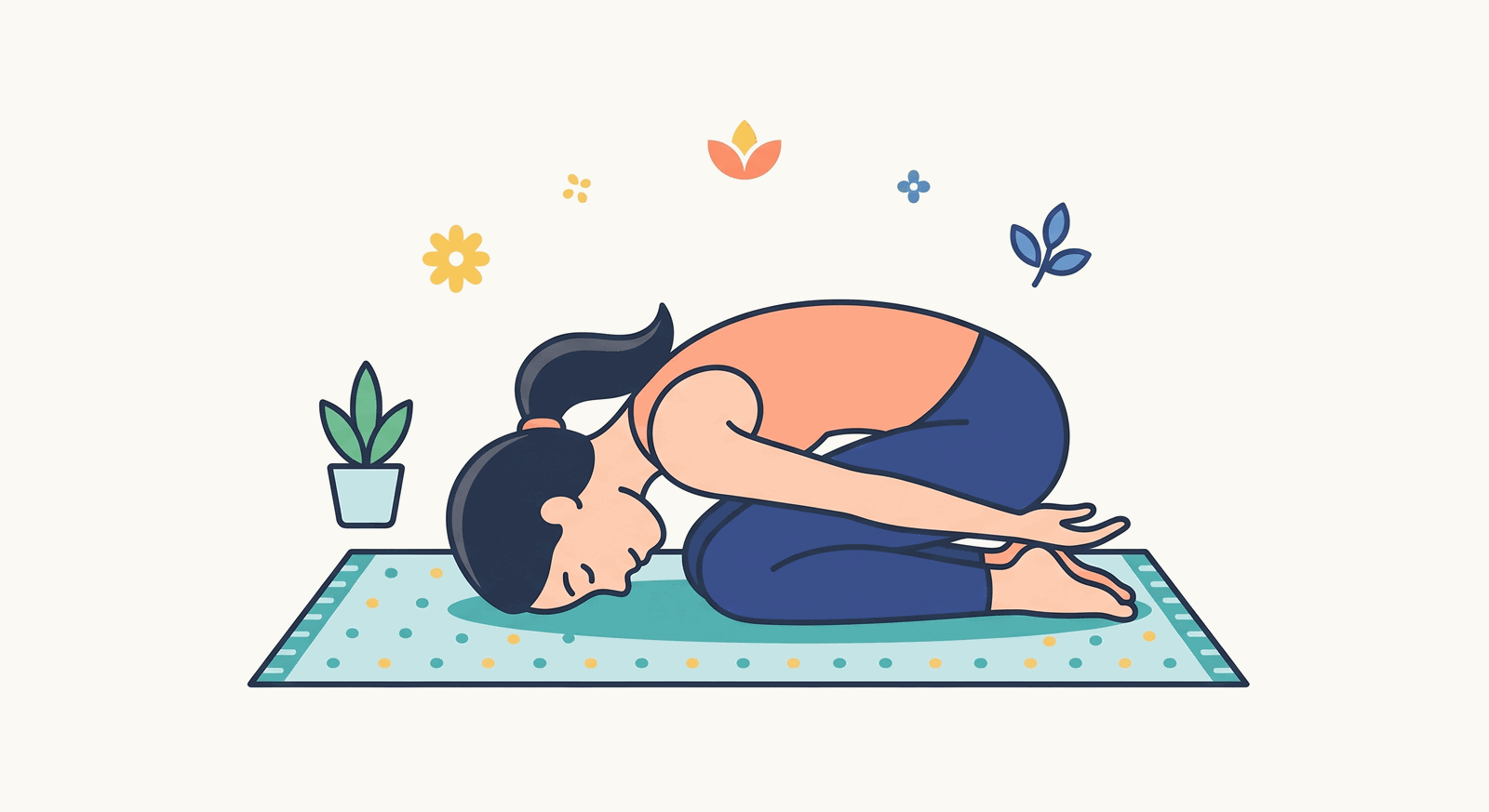
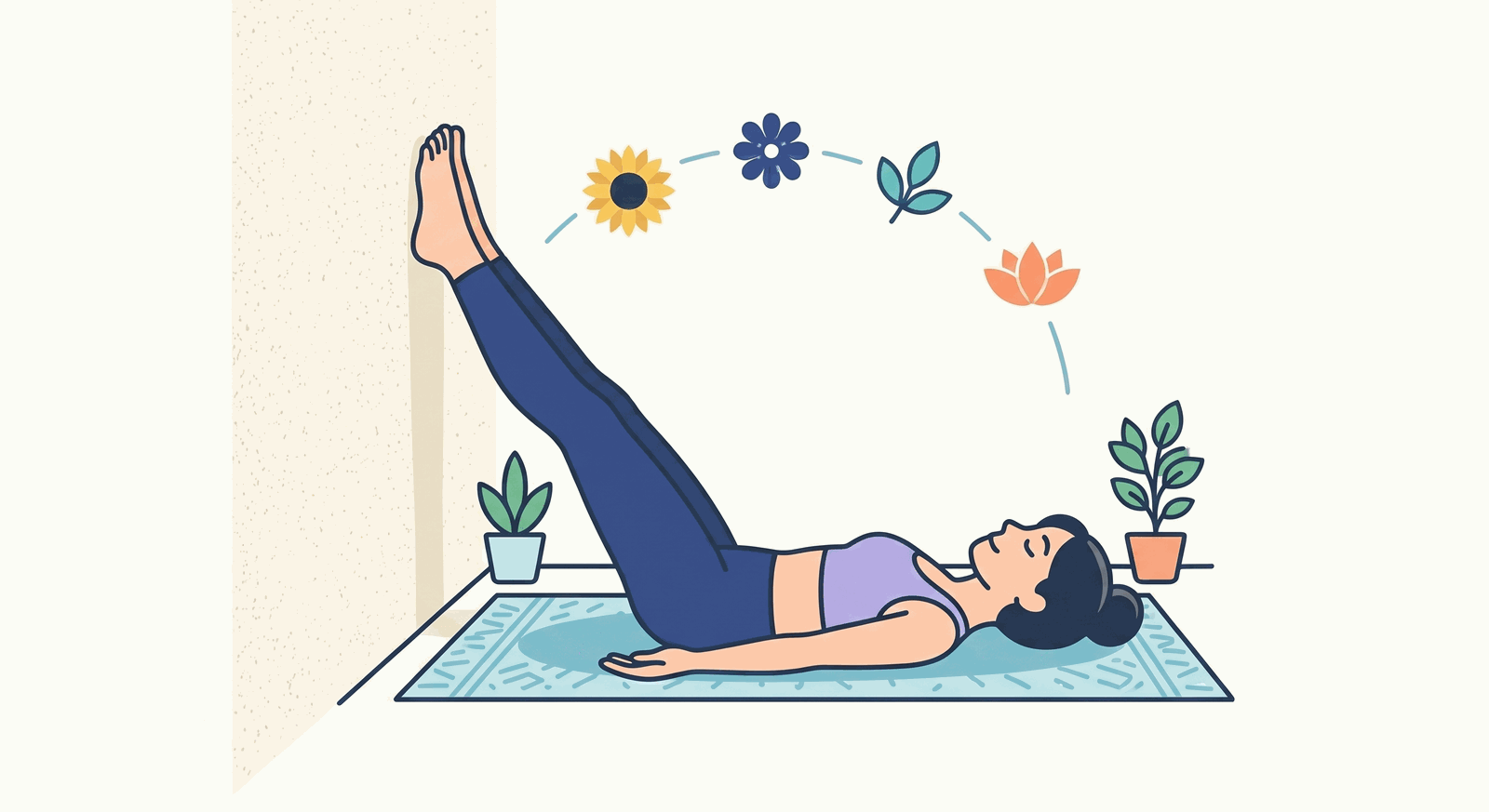
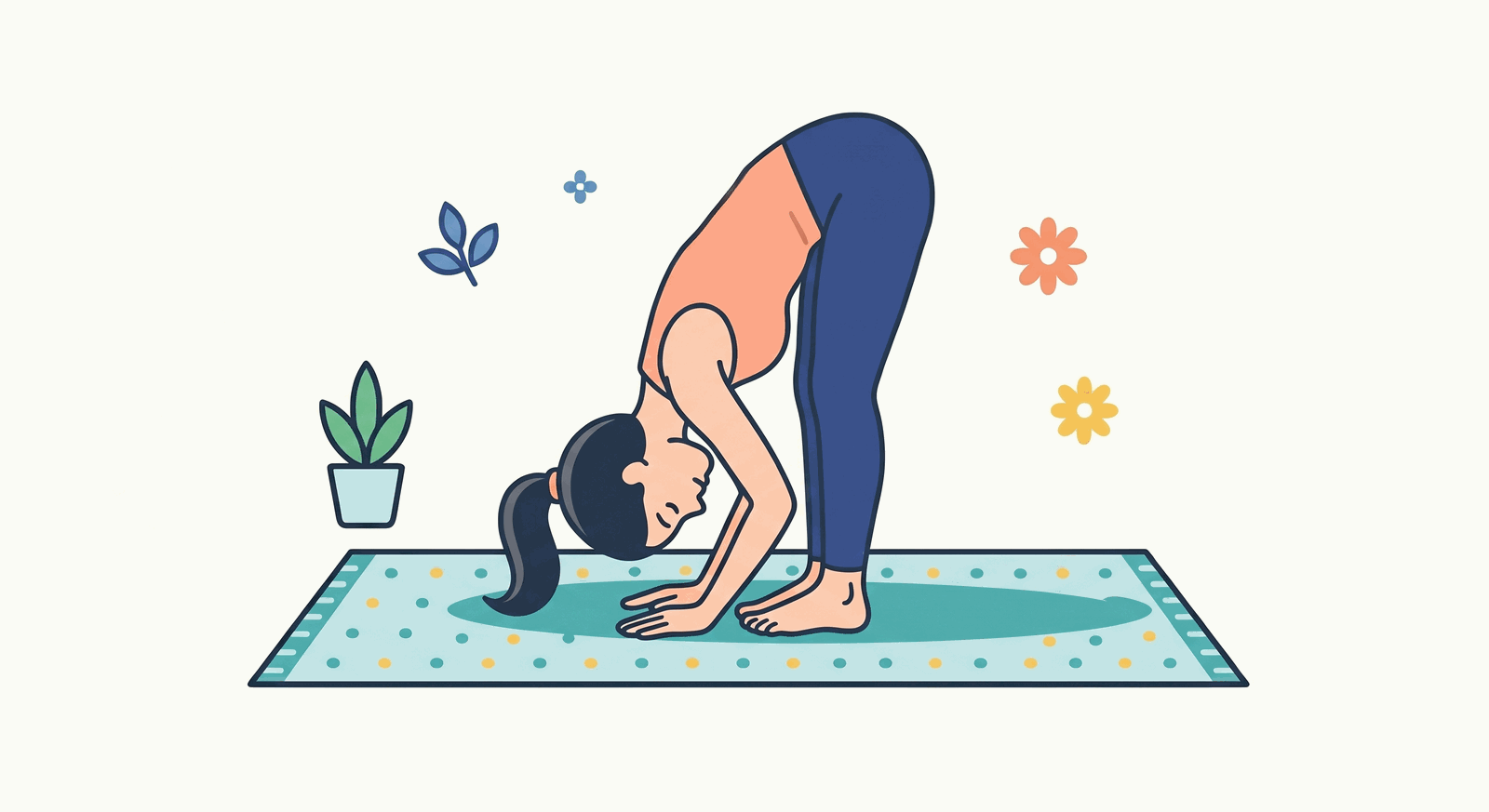
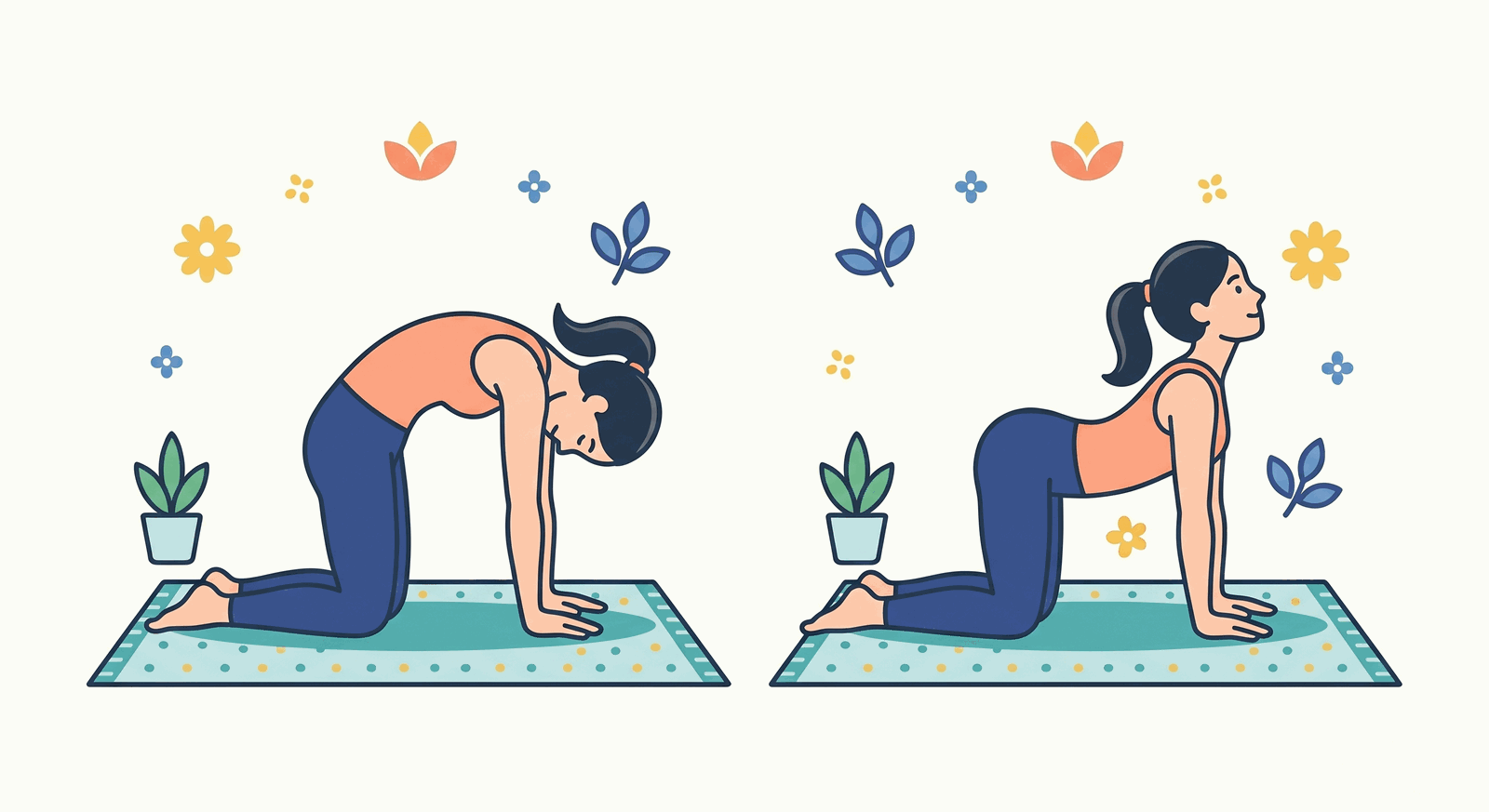
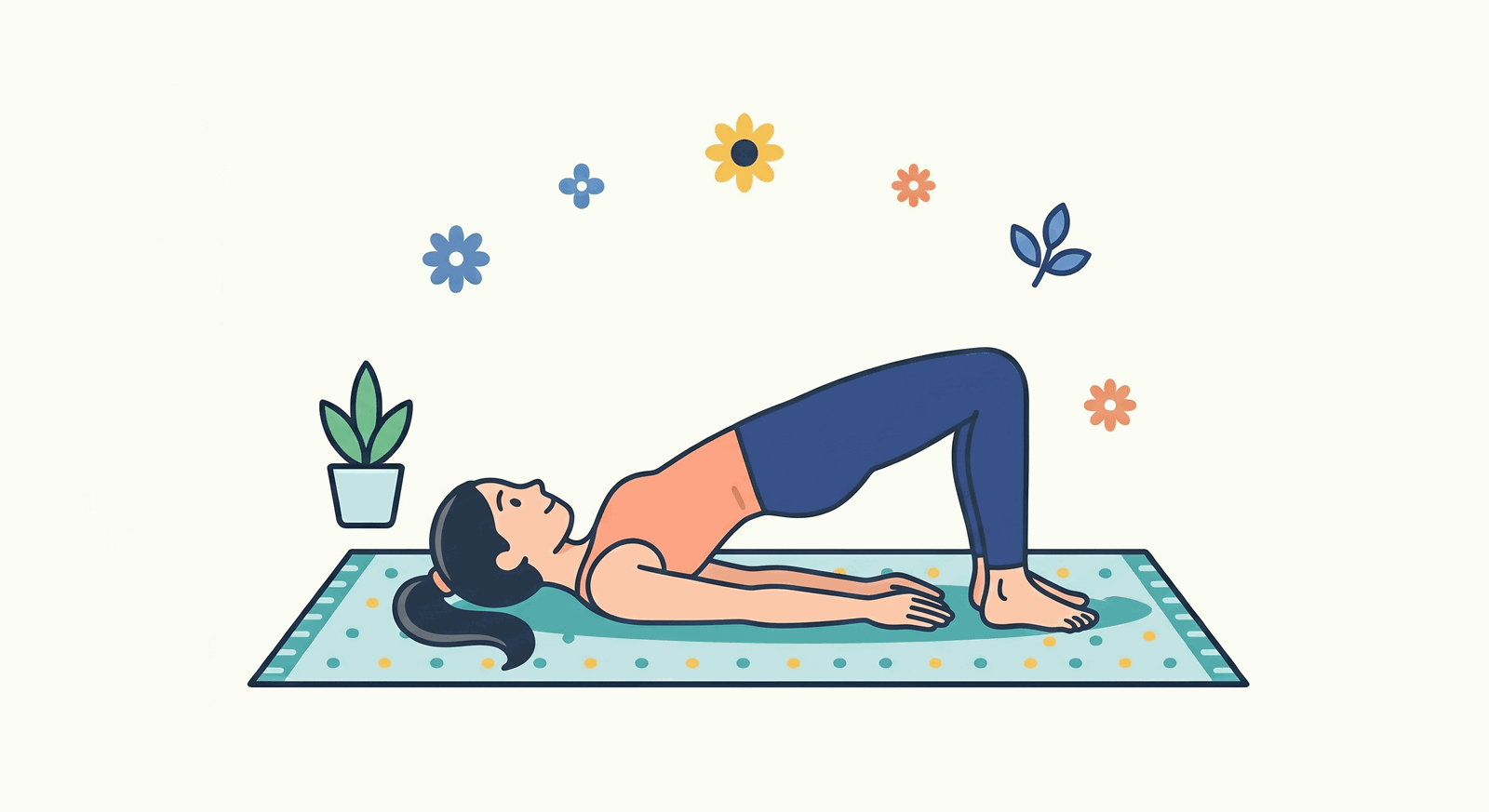
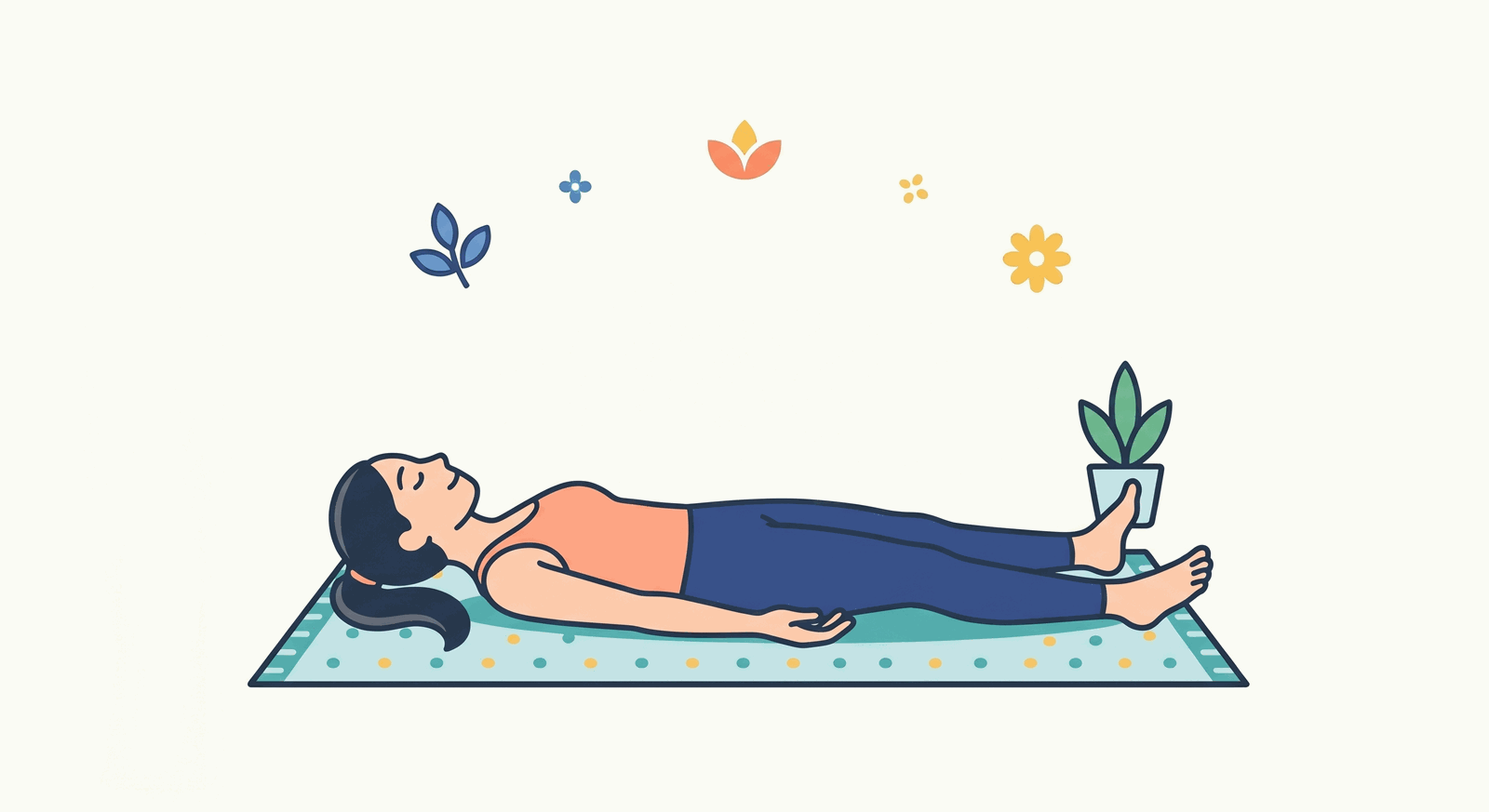
You don't need a class or even a full sequence. A handful of poses, held with a slow breath, will do most of the work. These six are gentle, need no flexibility, and each one nudges the body toward "rest and digest." Forward folds and supported postures are especially settling — the spine rounds, the gaze turns inward, and the body reads the shape as safety.
Breath is the bridge
Postures set the stage, but the breath is what actually flips the switch. A slow exhale that lasts longer than the inhale gently applies the "vagal brake" — it tells the heart to slow and the nervous system to stand down. This is why every calming pose above is paired with breath, not held in silence. Practise the poses while letting the exhale stretch a little longer than the inhale, and you double their effect.
Breath has always been the heart of yoga — Patanjali listed pranayama, the regulation of breath, as one of yoga's core limbs. The same insight runs through the Buddha's teaching of anapanasati, mindfulness of breathing, where the breath becomes the anchor that steadies a restless mind. If you'd like simple techniques to start with, the breathing exercises on our homepage — box breathing, 4-7-8, and alternate-nostril breathing — each take under two minutes, and they pair naturally with the poses here. Our piece on Vipassana meditation goes deeper into watching the breath as a path to a quieter mind.
Ayurveda: anxiety is a Vata storm
Ayurveda described anxiety with striking precision thousands of years before brain scans existed. It is the signature of Vata — the dosha that governs movement, the nervous system, and the mind. Vata's qualities are cold, light, dry, mobile, and irregular. Look at anxiety and you see the same qualities: racing, scattered thoughts, restlessness, a fluttering shallow breath, cold hands, broken sleep. When Vata goes out of balance, the mind itself becomes windblown.
The remedy, in Ayurvedic logic, is simply the opposite set of qualities — warm, steady, slow, grounded, rhythmic. This is exactly why slow, supported yoga calms anxiety so reliably: long holds, a warm room, an unhurried breath, and contact with the earth are all Vata-pacifying. You can learn which dosha tends to dominate for you in our guide to knowing your body.
This article is for general learning, not medical advice. Yoga is a strong support for everyday anxiety and stress — not a substitute for professional treatment. If anxiety is persistent or overwhelming, please speak with a doctor or a qualified mental-health professional.
Before starting any new physical practice — especially if you live with high blood pressure, heart conditions, back, neck, knee or wrist issues, glaucoma, recent surgery, pregnancy, or any chronic condition — please consult your doctor or a qualified yoga therapist. Move slowly, modify or skip any pose that brings pain, and never push through sharp discomfort. Your body's signal always comes before the sequence. AnamayaPath does not provide medical advice or treatment.
Sources
Cramer et al. (2018). Yoga for anxiety: A systematic review and meta-analysis of randomized controlled trials. Depression and Anxiety. Read →
Simon et al. (2021). Efficacy of Yoga vs Cognitive Behavioral Therapy vs Stress Education for the Treatment of Generalized Anxiety Disorder. JAMA Psychiatry. Read →
Streeter et al. (2010). Effects of Yoga Versus Walking on Mood, Anxiety, and Brain GABA Levels: A Randomized Controlled MRS Study. J Altern Complement Med. Read →
Streeter et al. (2012). Effects of yoga on the autonomic nervous system, GABA, and allostasis in epilepsy, depression, and PTSD. Medical Hypotheses. Read →
Frontiers in Psychiatry (2024). Effects of yoga on stress in stressed adults: a systematic review and meta-analysis. Read →
NCCIH. Kundalini Yoga Is Helpful for Adults With Generalized Anxiety Disorder. National Center for Complementary and Integrative Health. Read →